Annapurna Dhaulagiri Community Eco-Treks (ADCET)
It is ethical—and it is a truly sustainable tourism practice, for now and for the future.
Undeniably, Nepal is one of the world’s finest trekking destinations, offering exceptional cultural diversity and rich natural biodiversity. It is the only country in the world that boasts the highest, most breathtaking and awe-inspiring mountains, the deepest gorges, and mystical valleys.
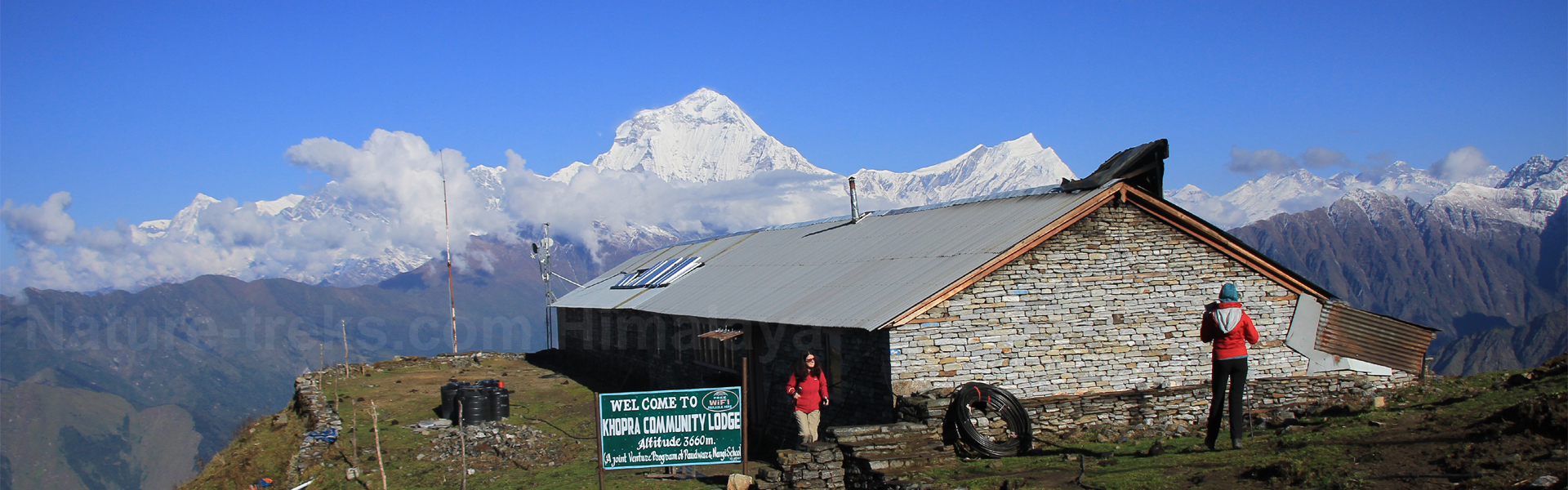
The Annapurna–Dhaulagiri Community Eco Journey is one of the best models of community-based tourism in Nepal, pioneered in 2010 in partnership with local communities. The trail runs through settlements of the culturally rich Magar community and across the spectacular hills of Mohare and Khopra, rewarding trekkers with panoramic Himalayan views beyond words.
Majestic peaks such as Dhaulagiri, the Annapurna Massif, Manaslu, Machhapuchhre (Fishtail), Himchuli, and the Jugal range dominate the northern horizon from west to east. In addition, pristine forests of Chilaune, pine, fir, Castanopsis, Quercus, and rhododendron provide a deep sense of peace and connection with nature.
The melodious calls of mountain birds—Grosbeaks, Yuhinas, Tits, Magpies, and Pheasants—and the possibility of encountering wildlife such as deer, Himalayan black bears, and the common leopard make the journey both exciting and alive.
.
<strong>OBJECTIVES</strong>
As a responsible adventure travel company, Nature-Treks.com Himalaya (NTH) believes that ecotourism is sustainable tourism—centered on communities, conservation, education, and responsible travel.
Our core objectives are to support community-owned and operated eco-lodges; build environmental and cultural awareness; provide positive experiences for both visitors and local people; generate economic benefits and employment opportunities; and promote nature conservation by minimizing impacts and keeping the environment and culture as intact as possible.
.
<strong>How do we work</strong>!
Nature Trek works closely with the communities of Myagdi District in operating community eco-lodges and homestays, with the sincere aim of creating meaningful journeys for visitors while ensuring real economic benefits for education and overall community development.
Nature Trek pioneered this pure community-based tourism trek and has led its promotion in both local and international markets since 2010. As ethical tourism continues to grow, we seek to welcome travelers who share our vision of building sustainable communities.
To support this, we have carefully designed two trekking itineraries suitable for all age groups. Each trek is led by highly experienced and knowledgeable Nature Trek (NTH) guides, supported by staff and porters recruited directly from the local community. We also actively encourage and employ female guides and support staff from the area.
Furthermore, we invest in guide training, including professional guiding skills and English language development, and prioritize employing local people so they can build dignified livelihoods at home rather than seeking work abroad.
<strong>Nature Treks as a responsible Company</strong>
We are fully committed to our objectives and never promise what we cannot deliver. The strength of this trekking project lies in the fact that the majority of the income goes directly to the local communities—meaning we give back more than we retain.
Most of the support staff and porters are recruited from the community, and the only NTH staff member on the trek is the experienced and knowledgeable trek/tour leader who escorts our guests.
<strong>What are the main attractions of this trek</strong>?
- Panoramic views of more than 30 snow-capped peaks, including three 8,000-meter giants: Dhaulagiri I, Annapurna I, and Manaslu.
- Peaceful, off-the-beaten-path trails away from mass tourism.
- Rich Magar culture, traditional lifestyles, and ancestral dances.
- Lush orange orchards, organic farms, and traditional Nepali handmade paper production.
- Community-managed eco-lodges, schools, and forests.
- Exceptional birdlife and beautiful Himalayan flora.
- Wi-Fi connectivity in key locations along the trail.